
HappyCo
Sourcing by HappyCo helps procurement and sourcing managers gather and compare competing vendor bids before awarding a job, taking the friction out of the full bidding process. Its AI assistant, Joy, sits at the core of the application to help you initiate sourcing events and surface the right vendor recommendations. This overview explains what Sourcing covers, why competitive bidding matters, and how Joy powers the workflow end to end.
 In this article
 What Sourcing solves for procurement
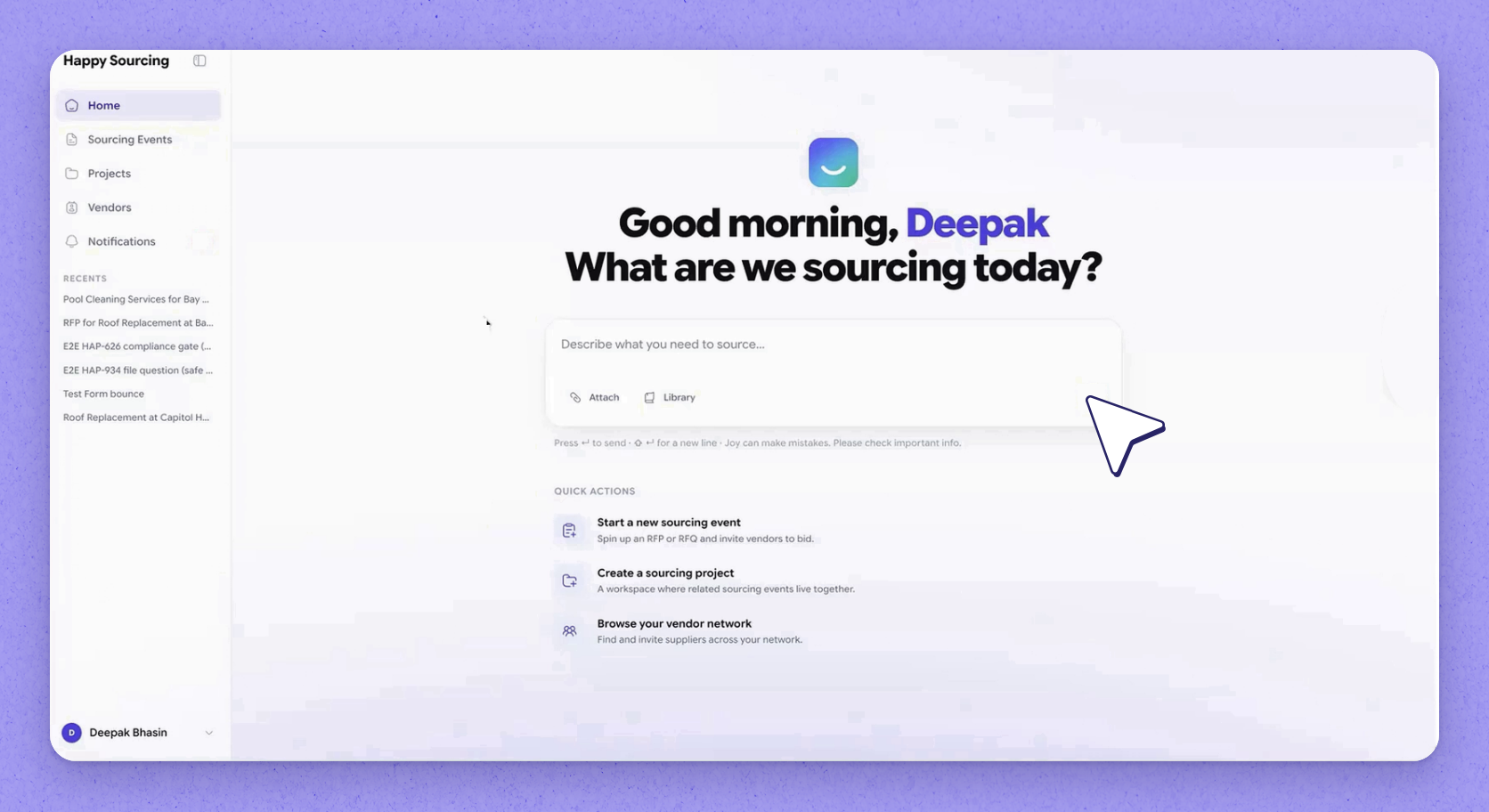
Sourcing by HappyCo is built to solve the sourcing needs of procurement and sourcing managers — the people responsible for gathering competing bids from vendors before any job gets awarded. They line up a handful of bids from vendors, compare them, and decide which vendor to award a particular job to. Sourcing gives your team a smarter, faster way to manage that bidding process from start to finish.
 What Sourcing covers
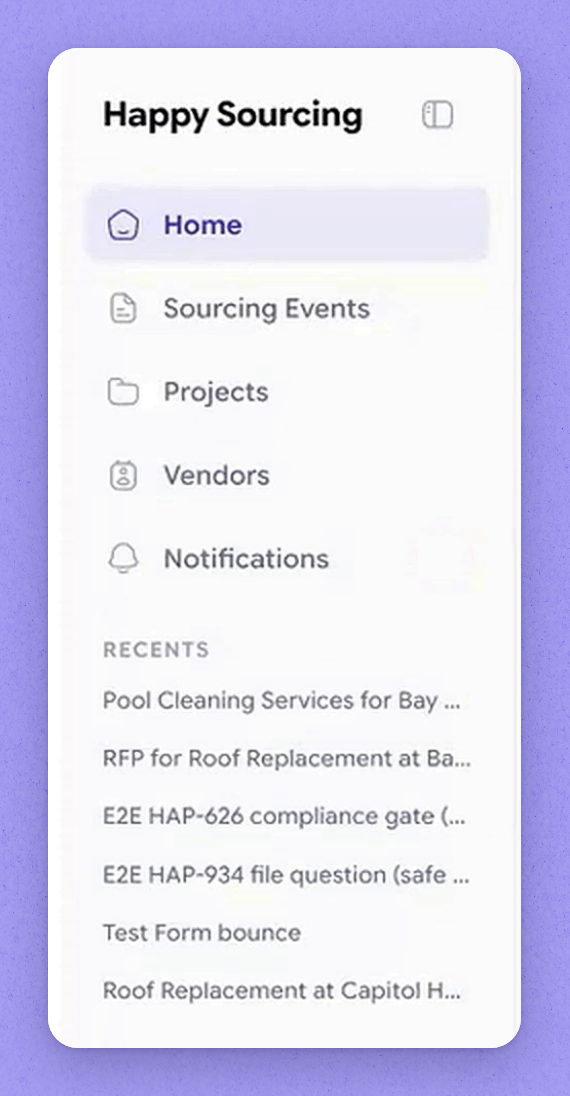
Sourcing covers not only capital projects, but also any kind of recurring contracts and negotiations your property management company (PMC) might have with vendors. That range goes right down to a single one-off replacement. To see how this comes together, the rest of this walkthrough follows what the process looks like in practice.
 Spend thresholds and competitive bids
PMCs typically set a spend threshold. For example, if the cost of doing or replacing something is over $5,000, they want at least three vendors to bid on it. Gathering those competing bids gives you a clean paper trail and the confidence to select the best vendor for the job.
 Tip
Tip
The threshold and minimum number of bids are set by your management company — in the example given, that's a $5,000 threshold requiring at least three bids.
 How managers choose the right vendor
The best-suited vendor isn't chosen on price alone — pricing is important, but it's not the only criteria sourcing managers use. They also weigh a vendor's credibility and past performance where that information is available, along with compliance status and the certifications they carry. Your own company's priorities matter too, such as giving preference to women-owned or minority-owned businesses.
 Joy, the AI at the core
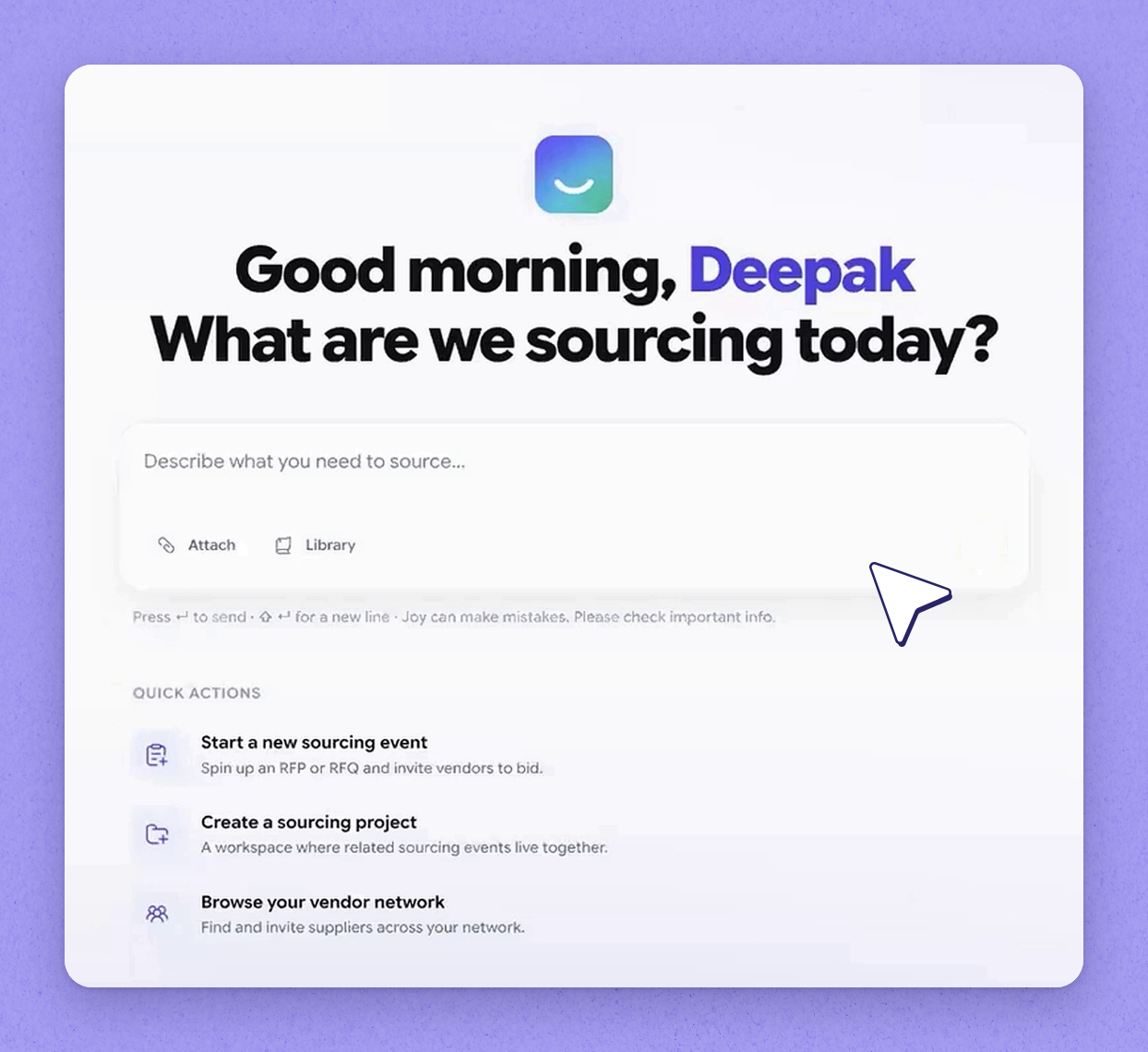
All of that vendor information is fed into the application so that Joy can make the right decision and surface the right recommendation. Joy is the AI that sits at the very core of Sourcing. As you'll see throughout the walkthrough, everything in Sourcing centres around Joy.
 Genuinely agentic, not bolted-on AI
This isn't AI bolted onto a standard web-based application — it's the other way around. Most of what you'll see is genuinely agentic. Behind the scenes, multiple agents run in sequence and in parallel, working together to reach the outcome you're after and keep your sourcing process moving.
| Criteria | Why it matters |
|---|---|
| Pricing | Important, but not the only factor in the decision |
| Credibility | The vendor's standing and reliability |
| Past performance | Track record, where that information is available |
| Compliance | The vendor's compliance status |
| Certifications | The certifications the vendor carries |
| Company priorities | Your company's own criteria, such as preference for women-owned or minority-owned businesses |
Frequently asked questions
Who is Sourcing built for?
Sourcing is built for procurement and sourcing managers — the people responsible for gathering competing bids from vendors before a job is awarded.
Why do management companies require multiple bids?
PMCs typically set a spend threshold — for example, once a cost exceeds $5,000, they want at least three vendors to bid. This gives them a clean paper trail and the confidence to select the best vendor.
What kinds of work does Sourcing cover?
It covers capital projects, recurring contracts, and negotiations a PMC might have with vendors, right down to a single one-off replacement.
What is Joy?
Joy is the AI at the core of Sourcing. Vendor information is fed into the application so Joy can surface the right recommendation, and the product is genuinely agentic — multiple agents run in sequence and in parallel behind the scenes.